Friday, 24 January 2020

Basic tips before getting a Dental Implant

Although more than 80% of implants placed continue to function properly after 15 years, from the dental clinic in Rani Bagh they insist that the patient should follow some advice before deciding to have a dental implant.

Currently, dental implants are among the most reliable surgical techniques of all those performed in human beings. Despite this reliability, from the dental clinic in Saraswati Vihar, they insist that patients have to follow some basic tips that will help them choose the most suitable center and have some knowledge of what the surgical intervention they will undergo will be.

What should you know about dental implants?
They are metallic elements that are surgically placed in the jaws below the gums, restoring the lost dental parts. The implant fuses with the jaw bone, providing stable support for artificial teeth. An advantage of this procedure is that it does not require the wear of adjacent parts, explains the dentist in Delhi.

Dental implants act as substitutes for dental root. They are the basis on which crowns or prostheses can settle to replace teeth that have been lost. Although this is the ultimate goal, it is essential to sit calmly and plan in detail a treatment that is stable, functional and aesthetic in the long term before placing an implant.

The first thing the dentist in Rani Bagh will do will be a comprehensive, dental and periodontal medical history to assess possible interference between the patient's overall health status and implant treatment.

What is the initial phase of dental implant study and planning?
It is the moment when the implant team will advise you and give you all the information you need. Keep in mind that treatment with osseointegrated dental implants is simple, but of high technical complexity. It must be well studied and planned.

This phase aims to:
  • Provide information about the implants or the type of prosthesis indicated.
  • Help choose the ideal time to perform the treatment.
  • Individually check the oral and general health status of the patient for possible risks or contraindications of the treatment to be performed.
  • Inform the patient of the appropriate treatment plan.
  • Prepare the recovery of your comprehensive health, guiding you on other possible treatments that you may need, whether dental (periodontal, restorative...) or general.
With all the information provided by the patient's models, the scanner or x-ray, the patient's medical history, the patient's mouth, and what the patient demands or expects from treatment, the dentist in Saraswati Vihar can predictably plan the number and location of dental implants, as well as the shape, size, and orientation of the final restoration.

According to the Best Dentist in Delhi, "the treatments with Dental Implant in Pitampura that we perform have worked very positively and with very good results, both in duration, comfort, reliability, and aesthetics. To achieve these results, patients should follow some basic tips before having a dental implant, so that the whole process, from start to finish, goes smoothly."

Therefore, the dentist in Delhi recommends following some basic tips:
  • Choose a trusted and referenced dental clinic.
  • Have direct dealings with the dentist and absolute trust in who will perform the surgery.
  • Establish a close and mutually trusting relationship with the dental implantologist in Pitampura.
  • The chosen center must report all possible treatments, from the number of implants to the type of prosthesis, either removable or fixed.
  • The patient must be informed of the type of implant to be carried and the trademark, as well as the type of prosthesis the material from which it is made.
  • Another factor to consider is the time, from the beginning of the surgery phase to the time of implanting the parts. To shorten the patient's stay at the center and reduce their distress and stress.
  • Likewise, the patient must know at all times what is going to be done in his mouth and what the waiting time will be. On the other hand, the aesthetics are also of concern and that is why the client has to know if after surgery and until the time of the implant will be able to wear a prosthesis or not.
Another important aspect is that the patient must be informed about any setbacks that may arise with the implants.

Friday, 17 January 2020

Stains on Teeth: Causes and How to Remove them?

Dental-Stains

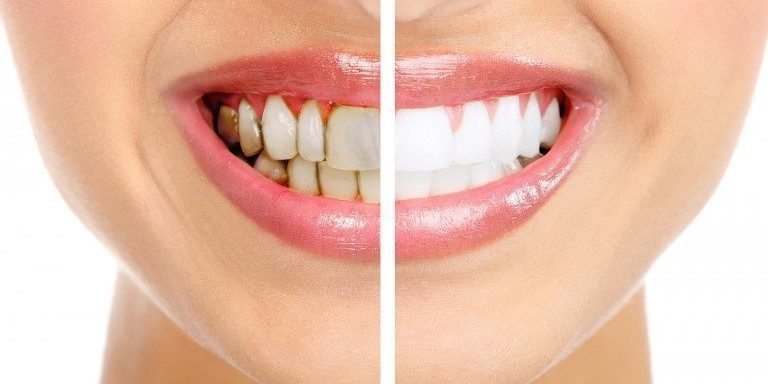
The stained teeth affect dental aesthetics is one of the major dental problems, which may appear due to poor hygiene, drugs or genetic. The dentist in Delhi explains to you the main causes and how to eliminate them.

Types of stained teeth

Dental stains can affect temporary teeth or permanent teeth, however, depending on the color in which they occur you will know the cause that originates them. The main ones are the following:

White spots
  • Caries
In the initial stages of tooth decay, the tooth is observed with a white spot due to the demineralization of the enamel, which can be treated by applying a special fluoride that stops its progress.
  • Fluorosis
These white spots are easily identified by the mottled appearance they present. This condition is due to excess fluoride that is applied in childhood and that remains until adulthood. In addition, in certain states of the country, water contains large amounts of fluoride, which when ingested end up affecting the teeth.

Brown spots
  • Harmful eating habits
The brown spots are superficial and commonly adhere to the inside of the teeth. They are caused by consuming drinks such as coffee, red wine, cola, and in the case of tobacco, nicotine and tar produce alterations in their original color.

Gray spots
  • Trauma
When a tooth receives a blow due to a fall, a car accident or fight, it changes color to a grayish tone as a result of pulp necrosis (nerve death). Sometimes it can cause pain when chewing, being necessary a root canal treatment in Pitampura to relieve the discomfort.

Black spots
  • Mouthwash
The consumption of an antibacterial substance such as chlorhexidine found in certain dental rinses can cause black spots due to misuse. The appearance of these will depend on certain factors such as:
  • Chlorhexidine concentration
  • Treatment duration.
Therefore, it is important to follow the instructions of the dentist in Rani Bagh to avoid stains that affect your dental aesthetics.
  • Tartar
It is very common for patients suffering from gum diseases such as periodontitis, to have black spots due to dentobacterial plaque turned into tartar that adheres to the surfaces of their teeth causing bad breath and even bone loss, says the dentist in Saraswati Vihar.

Green spots
  • Poor hygiene
Green spots are on the necks of the teeth, observed mainly in children and adolescents for poor dental hygiene.

By not brushing the bacteria remain on the teeth and gums for a long time, allowing the substance phenacetin produced by the decomposition of blood in the gums, staining your teeth with a green tone.

Yellow spots
  • Dentobacterial plaque
The main cause of the yellow spots on the teeth is the dentobacterial plaque, caused by the breakdown of food debris that combined with an incorrect brushing technique begins to change the tone of the teeth.
How to remove stains on teeth?
  •  Dental cleaning
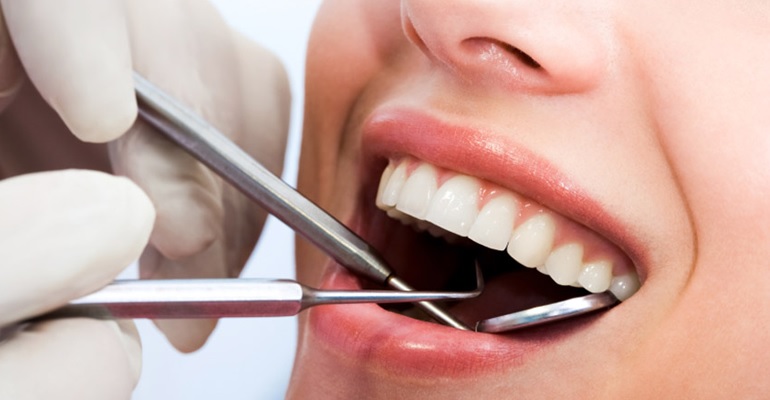
Professional dental cleaning involves removing stains, dentobacterial plaque and tartar below the gums. The dentist in Delhi recommends it every 6 months to maintain healthy gums, as well as white and toothless teeth.
The best dentist in Delhi explains the importance of this treatment.
  • Teeth whitening
The teeth whitening in Pitampura is a dental treatment comprising applying cosmetic active ingredients to penetrate the enamel, removing stains inside and outside of the teeth, looking white teeth and leaving a brighter smile.
  • Dental veneers
The dental veneers in Delhi are thin foils acting as covers, in order to cover the teeth spots occur which can not be eliminated with tooth cleaning medicinally or excess fluoride.

Sunday, 12 January 2020

Dental Checkups: why are they so important?

Dental-Checkup

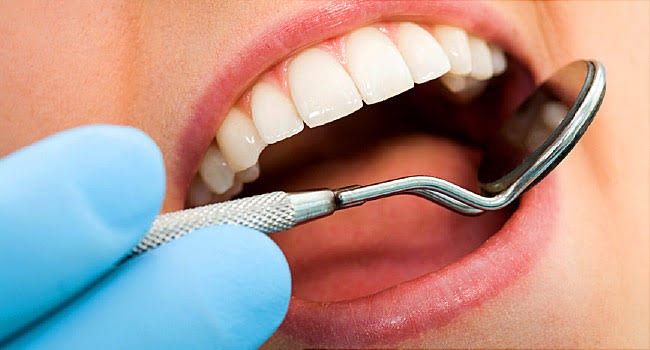
Many people only remember going to the dentist in Delhi when they have mouth problems. However, this bad habit of not having dental checkups could be detrimental not only to your dental health but also to your general health.

In fact, the mouth is a window to the general health of the body: it reflects the general state of health. Certain diseases can be discovered through a Complete Oral Exam at dental clinic in Rani Bagh, even before symptoms appear in other parts of the body. In addition, in the mouth we can see some lesions that can alert us about vitamin deficiencies, lack of minerals or nutritional deficiency states.

The association between oral microbial infections such as periodontopathies and systemic disorders is not a new concept. Today we have a large amount of evidence that highlights the association between oral health and a wide variety of diseases, explains the dentist in Rani Bagh.

Gum disease

The gums should not bleed when you brush your teeth or floss. Bleeding in these cases shows a possible gum disease.

Gingivitis, the mildest presentation of gum ailments, arises in response to plaque that is formed by bacteria between teeth and gums. If the plaque expands, the immune response increases and can destroy the tissues and bones in the mouth, causing spaces between the teeth that can become infected. In this case, the gum disease is called Periodontitis, which can become chronic, warns the dentist in Delhi.

Tooth drop

Both tooth decay and gum disease can cause tooth loss, says the oral surgeon in Pitampura.

Bad breath or halitosis

Bad breath affects about 65% of the population. Halitosis can be a symptom of a large number of diseases, but the number one cause is poor dental hygiene.

Pregnancy complications

Gingivitis affects between 60 and 70% of pregnant women. When pregnant women have serious dental problems, their babies are more likely to develop cavities. In addition, poor maternal dental health is also associated with advanced births and low birth weight.

Diabetes

Dentists have long known that diabetes is a risk factor for periodontitis. However, recent studies indicate that this relationship could be bidirectional. Poor dental health can also be a risk factor for insulin resistance and diabetes. Some studies have even indicated that in patients suffering from both diseases, resolving periodontitis can improve diabetes control, says the dentist in Saraswati Vihar.

Stomach ulcers

In people with periodontitis, plaque that forms in the spaces under the gums can become a reservoir of Helicobacter pylori, the bacteria responsible for stomach ulcers. This bacterium can be transmitted orally, and large epidemiological studies have found a relationship between periodontitis and the positive test for this bacterium, which is also a risk of stomach cancer.

Cancer

Gum diseases and dental problems are also associated with the human papillomavirus, HPV, which causes almost 80% of oral cancers. Other research has suggested that periodontitis can promote the growth of cancer cells in the mouth.

As you can see, dental check-ups at dental clinic in Saraswati Vihar not only help you to
  • Maintain an attractive and healthy smile
  • Maintain the functionality of the organism
  • Save costs in dental treatments
They are also indispensable for your overall health.

Monday, 6 January 2020

VENEERS: ADVANTAGES AND TYPES

Dental Veneers

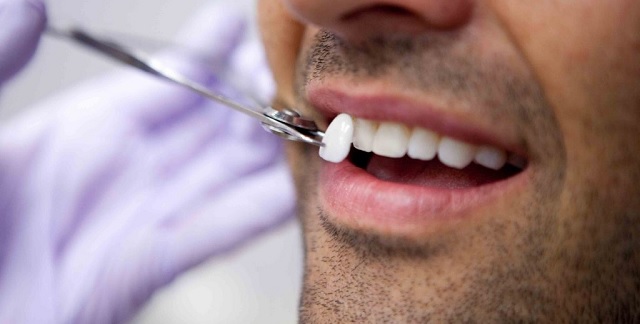
The dental veneers are thin foils of composite or porcelain fixing in the outside of the tooth. It is an aesthetic treatment that allows you to get a perfect smile. With this technique, it is possible to correct certain deformations and irregularities, such as broken, short or small teeth. Also, the pieces rotated or inclined. Excellent results are achieved, with a method that is neither invasive nor aggressive. In the following article by the dentist in Delhi you will know more details about them.

Advantages of dental veneers
  • It is not an aggressive treatment. Due to its characteristics, its placement only implies a slight carving of the tooth and in some cases, it may not even be necessary, explains the dentist in Rani Bagh.
  • You get a natural look. As they are ultra-thin, they are barely perceived. A natural result is achieved, only those who appreciate the great change that has occurred in the smile will realize that the treatment has been performed.
  • It is a quick treatment at the dental clinic in Rani Bagh. In the case of composite dental veneers, only one session is necessary. While in one of the porcelain in three visits the final result will have been reached.
Types of dental veneers

Once you know its main advantages, we show you the two types of dental veneers in Delhi that we offer you.

Composite dental veneers
To make composite dental veneers a resin-derived material is used, which can be molded and mimicked 100% with the patient's teeth. It is not an invasive technique, since to place each veneer you hardly have to touch the outer surface of the tooth. They are perfect when you want to correct slight color, position or shape alterations.

This type should be checked every year by the dentist in Saraswati Vihar, since it is a less stable material than ceramic. This fact may lead to a slight change in color over time. In this review, any alteration that has occurred can be repaired. They are placed in a single session, since the resin is molded on each piece until the desired shape and color is achieved. It is a material that mimics the tooth, and adheres using a special light source, which allows the paste to harden and stick to each piece. We emphasize that it is a painless technique, since it almost does not touch the tooth. Therefore, in most cases it is not necessary to use anesthesia.

Porcelain Dental Veneers
Porcelain veneers offer a higher quality than composite veneers. Their main advantage is that once they are placed, they hardly need maintenance. In addition, the results achieved are more natural and also last longer, explains the best dentist in Delhi.

The porcelain veneers are made taking into account the needs of each patient. Unlike the composite ones, more than one appointment is needed for this technique. These are the steps that are followed until completing the treatment:

1st visit. In the first visit each patient is studied individually, photographs are taken and videos are recorded to design their ideal smile. The measurements are taken and a mold is removed to obtain a provisional model, before the final one.
2nd visit. The tooth is superficially carved to adapt the piece to the porcelain used. The patient will leave the clinic with provisional veneers.
3rd visit. The final porcelain dental veneers are placed.

It is true that the price of porcelain veneers is higher than that of composite parts, but it is not less that they offer a higher quality result. They are the perfect option in these cases:
  • Dental fractures
  • Short teeth
  • Microdontia (teeth with a size smaller than the rest).
  • Cone teeth (cone-shaped incisors).
  • Major color changes.
  • Dentures that have previously been restored with composite.
  • Complete remodeling of the smile.
If you want to show a perfect smile, veneers are the best option. Request your appointment now, at dental clinic in Saraswati Vihar we will study your case and give you the solution you need.

Tuesday, 3 December 2019

When is a Dental Reconstruction Recommended?

Dental

Sometimes your teeth may suffer damage or alterations that require special treatments to return their functionality and appearance. But it can be difficult for you to identify when a dental reconstruction is necessary. From the dental clinic in Rani Bagh, we will tell you some cases and tips so you can answer this question.

Alternatives for Dental Reconstruction

Dental reconstruction is mainly responsible for repairing damaged teeth. Although sometimes it can also involve replacing it.

Depending on the damage that the patient's tooth possesses, the best dentist in Delhi can perform a dental reconstruction using one of the following methods:

Composite

The composite is a type of resin that is composed of synthetic materials. It is widely used to correct partial fractures of dental pieces, as it provides a natural finish and does not affect the functionality of the tooth or the bite.

In addition, its coloration is very similar to that of natural teeth. What makes it almost imperceptible.

They are also often used to make some types of fillings when caries are corrected and to make some custom pieces for other types of oral reconstructions.

Dental Veneers

Dental Veneers in Delhi has a mainly aesthetic purpose, so they are only used on the front teeth. They are very thin sheets of composite or porcelain that adhere to the tooth by means of a special glue. They can last between 6 and 12 years depending on their maintenance and the material.

These are mainly used to correct the color of the tooth and its shape. Although in cases of small cracks in the surface can also be used. If you are looking for a perfect and resistant smile, this is an excellent option.

Dental Inlay

This method of dental reconstruction is mainly performed by dentist in Delhi on molars with their external part very damaged and that have lost part of their structure.

One of the conditions for you to undergo this treatment is that the tooth does not have any problems related to poor dental hygiene. In addition, its natural form should not be affected.

A piece that fits perfectly in the area that needs to be rebuilt is made. This is cemented with a special glue. The procedure is performed quickly and is a little invasive.

Bolt and Crown Reconstruction

It is used in cases where for some situation the dental piece was very lowered so that the crown cannot be held correctly. To solve this problem, the best dentist in Pitampura must place a fiberglass bolt or post. These allow you to get the support you need.

It is mainly performed on the molars, since these are some of the teeth that are used to chew. So they need to be firm and strong.

When is a Dental Reconstruction necessary?

The oral or dental reconstruction seeks to recover and preserve parts that have suffered from some alteration that can occur for multiple reasons. Some of the most common are:

Fracture of the Dental Piece

Fractures in the teeth are quite common. In both children and adults.

In most cases, the breakage of a tooth only represents an aesthetic problem, especially if it occurred in any of the front pieces. But depending on the place and the magnitude of the impact, other slightly more serious problems may occur.

Such as damage to the maxillary bone, dental nerves, mobility of the tooth and fall of the tooth.
That is why it is important that when you receive a very strong blow on your teeth you visit a dentist in Pitampura. This will determine if any serious damage occurred or not and will indicate the treatment you should follow.

In case it is only a partial break of the tooth, it will surely resort to a reconstruction method to repair the damage and restore its original appearance.

Deep Caries

There are two possible situations when a dental reconstruction is necessary in this case:

Large, but Superficial Caries:
When cavities are large, but superficial and are removed, usually the affected area is irregularly shaped. In this case, a splice or filling of this must be done to prevent food and bacteria from accumulating and an infection again.

Caries that require Endodontics:
In case the tooth decay reaches the nerves of the tooth, it is necessary for your dentist in Rani Bagh to perform a root canal. Since the damage that occurs is more serious. This means that to completely remove tooth decay they must remove a large part or all of the pulp from the tooth, this depends on how severe the infection is.

Subsequently, a filling is made with a biocompatible material so that the piece can be functional again. And finally, the piece is polished to give it shine and make it fit perfectly to the bite.
Both procedures are considered as a type of dental reconstruction in greater or lesser proportion.

For Aesthetics
There are procedures that are considered as oral reconstruction and have a completely aesthetic objective. One of the most recommended by oral surgeon in Pitampura is the use of dental veneers.

You can use this if you have small spaces between the front teeth. If there is any scratch or superficial fissure in the piece, if your teeth have an irregular appearance or wear on the edge. Also if you simply want to wear a better smile.

Partial or Total Restoration
This category includes procedures such as bone reconstruction, and fixed or removable prostheses, these can be partial or total. It is a method of integral reconstruction

There are different alternatives to solve each of these cases. Depending on what is yours you can submit to one or the other. But it is very important that you go to the best dentist in Saraswati Vihar to evaluate you and determine which procedure best suits your needs.

Now it will be much easier for you to know when dental reconstruction is necessary.

Friday, 29 November 2019

Tooth decay, What to do?

Tooth Decay

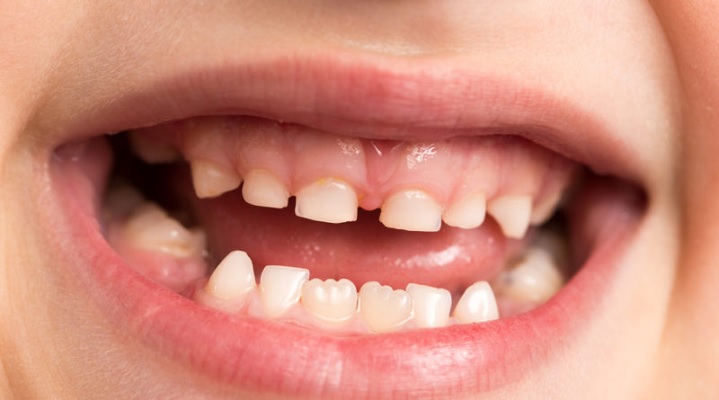
The fact that cavities appear on our teeth is normal for the vast majority of people. In general, with plaster it would be solved and ready to continue with our oral health, but the concern comes to mind when one of the smallest of the house appears a caries in one of his milk teeth. The best dentist in Delhi will explain everything you need to know.

What are cavities?

A caries is the product of an infection caused by bacteria that stick to the surface layer of the tooth, generating acids that, over time, weaken the child's tooth. It can also be caused by the continuous contact of sugar in the child's mouth. It is important to be very careful with the teeth of children or babies, remember that with them you eat, talk and smile, says dentist in Delhi.

A tooth decay in a child's tooth can generate pain to the point of reducing his appetite, which is bad at the time of his development. So, would you let your child keep a tooth decay in their milk tooth just because they are temporary?

What should be done if my child has a tooth decay in a milk tooth?

First of all, you should take the smallest of the house to have regular checkups to maintain your oral health. This dentist in Pitampura will make a complete diagnosis and decide on the most appropriate treatment for the child.

If we discover a caries in its first phase, which has a color change in an area of the milk tooth (the tooth looks opaque and has a white spot), it will be necessary to make good hygiene of the child's mouth to eliminate any bacteria that is around our baby's mouth, and the best dentist in Pitampura will only put a little fluoride in the area.

If this small white spot is not detected in time, it becomes darker to the point of creating a hole, which grows, causing the child pain, and can affect the permanent tooth behind it, warns dentist in Saraswati Vihar.

Mostly tooth decay occurs in the teeth, they are the most used when chewing, if there is no good oral hygiene in children the food is stored between the teeth making a feast for bacteria, this will help them generate more acids, having more likely caries appearance, explains dentist in Rani Bagh.

There are cases where babies have cavities in their first teeth, this is due to external saliva, bottle or pacifier contacts.

Prevent tooth decay

With a few simple steps we can avoid the appearance of this annoying disease.
  1. It is essential to integrate in the diet of our children some fruits and vegetables that increase the production of saliva by their great efforts to chew, such as apples, carrots, etc. This generates a self-cleaning action helping to keep teeth clean.
  2. Avoid 100% mother-child saliva contact, either by blowing your food or using your food spoon at the same time.
  3. Teach the child that after each meal you should brush your teeth with a small amount of toothpaste (adding fluoride to your teeth), using a soft bristle brush and demonstrating how to perform each movement. Remember to supervise the child until he knows how to do it correctly.
  4. Wait for your baby to finish his bottle before going to bed, continuous contact with this material can cause tooth decay in his first teeth.
It is recommended that with the appearance of the child's first tooth a visit to the dentist in Rani Bagh is made, in this way the dentist will verify that everything goes well with the baby's teeth. At dental clinic in Rani Bagh we know how to treat your child's mouth, so do not hesitate to bring him. We will make a complete review and diagnosis. We will wait for you!

Wednesday, 27 November 2019

Dental Sealants, Prevents Cavities Easy and Painless

Dental-Sealants

Did you know that with dental sealants you can prevent annoying tooth decay, without the need for anesthesia, without pain, and at a low cost? Keep reading to find out more.

In order to understand how sealants work, one must first talk about how cavities are formed, in simple terms caries lesions are formed when dentobacterial plaque (cluster of bacteria) is formed in the teeth and this plaque is attached to the teeth, If this plaque is not removed with brushing, two things will remain there indefinitely, it becomes tartar or causes caries lesions, these bacteria use carbohydrates (simple and complex sugars) as their food, forming acids and these acids are what they form decay (and destroy the tooth), explains oral surgeon in Pitampura.

But not all teeth are equally susceptible to decay, the most prone are the teeth in the posterior area of the mouth (premolars and molars) because in its anatomy, there are small grooves in which the plate is trapped and brushing is difficult to reach these areas, making them susceptible to developing decay, says dentist in Delhi.

Due to the anatomy of the teeth and other factors such as high carbohydrate feeding, caries susceptibility due to the type of bacteria present in each person's mouth, as well as poor hygiene, together these factors, will cause the lesions to appear Carious and its growth, which if not stopped, will reach the heart of the tooth, will destroy it, causing intense pain and in more severe cases, the loss of the dental organ, explains the best dentist in Delhi.

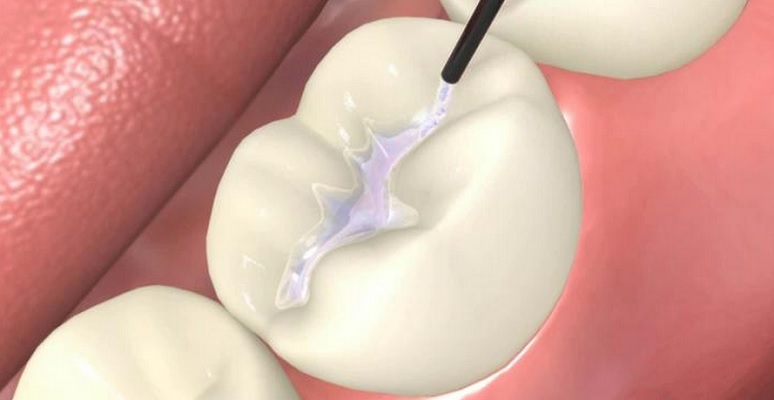
Fortunately, for the benefit of people, there is a fairly simple and economical method of preventing tooth decay, and they are the sealers of pits and fissures, this method involves the use of a special resin (filling), which is placed in liquid form on the pits and fissures that the teeth have, obstructing them, in this way, the dentobacterial plaque that forms cavities, will not be deposited there, and without bacterial plaque, there is no risk of developing caries, says dentist in Saraswati Vihar.

The advantages of using dental sealants are the following:
  1. It does not require anesthesia, so it is a painless procedure and in the case of children or people with phobia to the dentist, this helps to avoid the fear of common dental procedures.
  2. It is quite simple to do; since it only requires a cleaning of the teeth that the sealers will receive, placement of some special substances to create microperforations in the teeth, placement of the adhesive and subsequent placement of the sealant to immediately harden it.
  3. It is quite economical; Although dental procedures are generally not as economical, comparing the cost-benefit ratio obtained by preventing tooth decay, and preventing tooth decay prevents perforations in the tooth that over time can end up with vitality. of the same, sealants result in the cheapest and easiest option to maintain good oral health.
  4. Because cavities do not form, visits to the dentist in Rani Bagh are quite simple and enjoyable for both the patient and the dentist.
It should be clarified that sealants once put in the mouth, have an average life of 5 years, in which the sealant is worn down until it is lost, and it only remains when this happens, visit your dentist in Pitampura again to have a new sealer. Another thing to clarify is that sealants can only be placed on healthy teeth that do not have any existing carious lesion, if a tooth already had decay and a resin filling or amalgam was placed, it is no longer a candidate tooth to receive a sealant.

In addition to having a sealer does not imply neglecting hygiene since although cavities are not going to form on the teeth that received the sealant, poor hygiene causes inflammation of the gums (gingivitis) that if left untreated becomes tartar ( periodontitis) and this in addition to bad breath (halitosis) can cause over time, dental mobility and the possible loss of one or several teeth, explains the best dentist in Pitampura.

Our recommendation is that if you are a young person or as an adult you want to avoid the problems of visiting the dental clinic in Rani Bagh, anesthesia and the sound of the handpiece (drill) you choose the option of sealants, your visits to the dentist in Rani Bagh will only be simple and easy for a long time.