Sunday, 7 April 2019

Orthodontics, is it also for adults?

orthodontics

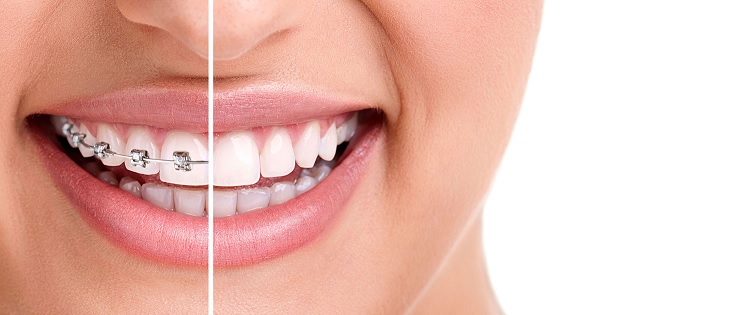
Until very recently, most people thought that wearing orthodontics was only for children and adolescents. However, this belief is false, since, in general, whenever a mouth is healthy, dental braces can be placed, whatever the age of the patient. Nowadays, it is very common to see adults with braces, for example, with the aim of improving their smile or correcting the bite.

Most of what they get is to improve their oral health and, in addition, increase their self-esteem.

These are some of the reasons why, whatever your age, it is good to follow an orthodontic treatment if it has been recommended by the best dentist in Delhi:
  1. Because teeth can move at any age
Whether due to illness, injury or by nature, teeth can begin to move at any age. Even if you've had your teeth aligned throughout your life, now your smile may look crooked. Perhaps, in your case, you have taken orthodontics in your childhood and now you may need some orthodontic correction by orthodontist in Pitampura after so many years.
  1. To avoid serious problems in the teeth and gums
Having a bad bite or misaligned teeth is very common in adults. These problems favour plaque and food debris remaining between your teeth, which is a risk factor for the onset of periodontal disease or gum disease. The consequences could also be translated into irregular wear of the tooth enamel, the appearance of caries, recession of the gums, loss of bone and teeth ... Among other things, a bad bite or misaligned teeth could favour the appearance of the syndrome of the temporomandibular joint, a disorder that causes discomfort in the jaw, says dentist in Pitampura.
  1. To avoid other health problems
If your teeth are not aligned or your bite is not correct, you may not face only oral health problems if you do not go to the dentist in Rani Bagh to solve them. The temporomandibular disorder mentioned above, for example, causes pain in the jaw, in the ear and in the temple, which can affect the quality of your sleep hours. A dental malocclusion does not allow you to chew food properly, which could cause digestive problems. What's more, periodontal disease is related to health problems such as diabetes, heart disease and heart attacks.
  1. Bring orthodontics: because now they are better and less visible
Orthodontics has evolved a lot over the years. That "mouth full of iron" is a thing of the past, since nowadays metallic orthodontics is much more discreet. In addition, now there is also porcelain orthodontics, with a colour very similar to that of your teeth. On the other hand, there is lingual orthodontics, which is placed inside the teeth. Finally, there is the invisible orthodontics, with Invisalign, which has no metal or wires, which has made it one of the most demanded treatments at dental clinic in Pitampura. Your dentist in Saraswati Vihar will be the one to help you choose what type of orthodontics is best for you.
  1. Because life expectancy has increased
Every time we live more years and, want or not, we all prefer to keep our teeth for life. Therefore, it makes sense that we invest money in aligning our teeth if that increases the chances of having good dental health, good general health and a better appearance for as long as possible. More and more adults are choosing to undergo orthodontic treatment.
  1. To improve your smile
Last but not least, many people choose orthodontics to improve their smile. The smile is one of the first things that people who cross your path see. A beautiful smile could make a difference in both the professional and social fields. It's worth doing a little effort to get that smile you've always wanted to wear. It will increase your confidence in yourself and, in addition, it will improve your quality of life in an incalculable way.
Find out about orthodontic treatments at dental clinic in Rani Bagh. In your first consultation, the dentist in Delhi will assess with you the different options to confirm which one is the best for you. Because wearing orthodontics is not just for children and teenagers, it's also for you!

Saturday, 30 March 2019

Problems of Dental Implants

dental_implant

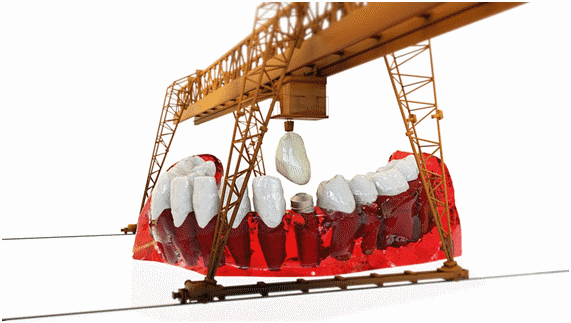
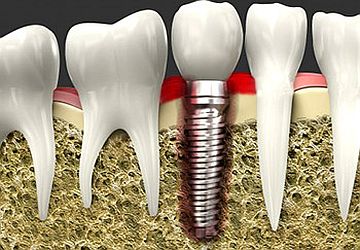
Dental Implant in Rani Bagh is like the root of a tooth that is placed by means of a surgery in the maxilla, under the gum, it is made of titanium, which will allow the dentist to embed the replacement tooth or the bridge where it is required. They are not removed like dentures and are beneficial for oral health in general, since they do not need to be attached to another tooth, such as bridges. Dental implants are an excellent option when a tooth must be replaced, since patients feel a great satisfaction and success, but dental implants can also cause certain problems in some cases, says best dentist in Delhi.

What is required for a dental implant?
  1. According to dentist in Delhi, you must have a healthy gum and adequate bone where you can support the implant, since a damaged gum cannot withstand the titanium that is placed from the gum to the bone.
  2. If you have a very thin or soft bone and cannot maintain the implant, this can be seen through X-rays, before the placement of any type and dental implant, states Dentist in Rani Bagh.

Problems of dental implants
According to Best Dentist in Pitampura, problems with dental implants can occur in different stages. Which can be:
  1. Before the dental implant is made: if the place where the implant will be placed does not have enough bone, this procedure cannot be performed. It requires that you have enough bone in order that the implant can be placed firmly, otherwise it would move. To correct the problem, graft can be performed, for the realization of this procedure there are many techniques and materials that help the rapid growth and development of bone in a healthy and uncomplicated manner, says Oral Surgeon in Pitampura.
  2. During the placement of the implant: In this stage there are usually no complications, since the process is very effective and the danger of some very low difficulty happening. If there is complication, there should be wrong manoeuvre during the process. The implants are made of titanium which adapts perfectly to the bone structure of the human being, without causing any discomfort, says dentist in saraswati vihar.
  3. After performing the dental implant: There are problems due to the bad treatment of the teeth or when an adequate hygiene is not carried out and no treatment is carried out, this can deteriorate, and this can cause damage to health. Another problem that may arise is when the implant is integrated into the bone, at this time it is required that there is abundant oxygen flow so that the patient does not suffer any discomfort or pain. And it is that a dental implant, for the body, is a strange factor, therefore, it can cause some type of rejection to it, that is why, after being able to place the implant, you must maintain a control with the Dentist in Pitampura, to avoid any kind of reaction harmful to health.

Thursday, 7 March 2019

Teeth Whitening or Dental Veneers?

teeth whitening

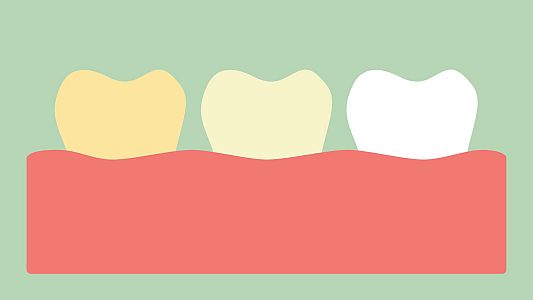
Do you have yellow teeth and are you ashamed to smile? Cannot find how to solve this problem? Currently in the market there are several alternatives, but the most demanding are teeth whitening and dental veneers.

Both treatments at Dental Clinic in Rani Bagh are suitable to eliminate the yellowish colour of your teeth and both help you achieve a more beautiful and aesthetic smile. In this way, the choice of one or the other depends on the case of each patient and it must be a qualified professional who is in charge of advising you which is the most appropriate.

In this sense, the treatment of teeth whitening consists of the application of chemical products on the surface of the tooth that, due to an oxidation process, causes the tone of the teeth to become lighter. These procedures have to be supervised by a dentist in Delhi since the chemical agents used can cause abrasions or damage to the gums. At Dental Clinic in Rani Bagh we use cold light whitening, thanks to which the patient can clarify several tones in a single session and with the guarantee of taking care of both the teeth and the gums.

Although there are different types of whitening, the best results are obtained at the dental clinic in saraswati vihar, in fact, you can get results in just one or two sessions because the concentration of whitening gels is much higher, around 35%.

This treatment is not recommended if you have:
  • thin little enamel
  • tooth sensitivity
  • cavities
  • periodontal disease
For their part, dental veneers are very thin porcelain sheets that are placed on the front of the tooth. This treatment brings a much whiter colour to the surface of the tooth. However, it extends the benefits since it allows to correct defects in the shape of the teeth, making them more homogeneous and therefore more attractive, says Dentist in Rani Bagh.

According to the best dentist in Delhi, the main advantage of dental veneers is their good result, because thanks to materials such as composite or ultra-thin veneers of e-max you do not need to carve the tooth. In addition, they are very resistant and do not wear out so they stand the test of time.

Causes of tooth colouring

Dental coloration is one of the main reasons why the majority of the population opt for teeth whitening treatments or dental veneers to recover the whiteness of their smile.

In this sense, the dentist in saraswati vihar, explains what are the main causes of tooth colouring:
  • Inadequate diet: Abuse of food such as coffee, tea, cola drinks, red wine or citrus juices.
  • Harmful habits: tobacco abuse.
  • Medicines: Constant consumption of tetracyclines, doxycycline (antibiotics), antidepressants, antihistamines, mouthwashes with chlorhexidine or excess fluoride.
  • Bad oral hygiene: Do not brush your teeth after each meal involves the accumulation of plaque and tartar and eventually the appearance of spots.
You know, if you want to have a perfect white smile you have to take care of your teeth. If you already have spots, opt for teeth whitening or dental veneers, but always without forgetting that the choice of one or the other treatment should be recommended by a professional. Go back to smiling at life!

Thursday, 28 February 2019

Dental Crown

Dental Crown

What is the Dental Crown?

The dental crown is basically a dental cover that is made to measure. The result is a prosthetic tooth similar in shape and colour to the original tooth. With dental crowns we can cover a diseased tooth completely, for different reasons. It is a simple procedure, which presents a quite natural appearance in the smile. Nobody will realize that you have a case, says dentist in Delhi.

When do we turn to dental crowns?
  • Coating a tooth: the dental crown is perfect for covering a damaged tooth. Generally, after carrying out an endodontics the custom-made sleeve is placed in the Dental Clinic in Rani Bagh.
  • Implant crown: the crown is also used to complete the treatment of Dental Implant in Rani Bagh after tooth loss.
  • Aesthetics: dental covers are also used to cover a tooth or tooth that aesthetically does not look nice.
  • Dental bridge support: Dental crowns can be used to support a bridge when there is a lack of teeth around the sheath.
Types of dental crowns
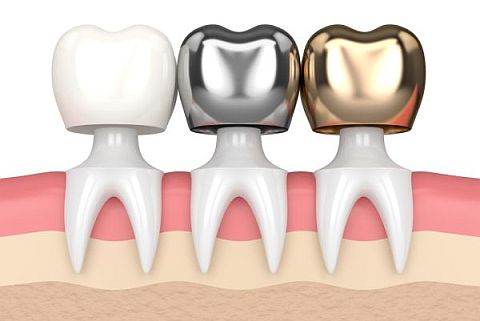
  1. Porcelain
At dental clinic in saraswati vihar the dental crowns that we usually recommend are ceramic or porcelain. They present almost perfect similarities to the natural tooth and provide very good resistance.
  1. Resin
Resin crowns are not usually the choice of Dentist in Rani Bagh. As a provisional dental cover, while the final crown is made they are fine, but they are not strong enough as other types of dental crowns.
  1. Zirconium crowns
In terms of price, zirconium dental crowns are the most expensive. But they are also the best properties, both aesthetic and mechanical present. Zirconium has characteristics very similar to natural tooth enamel, as they offer a unique transparency. We like to recommend this type of covers to give support to the most visible dental pieces, since their properties are perfect. In addition, zirconium is one of the most avant-garde and resistant materials used in dentistry, says dentist in saraswati vihar.
  1. Metal crown
These dental covers are made with gold, nickel or platinum. As for resistance, they are great, but they are not aesthetic at all. Thanks to their properties they are crowns for life, although they are used very little in dental clinics.
  1. Porcelain and metal
Resorting to this combination of materials is an alternative, since it offers the advantages of both types of dental crown. Your choice is contingent upon the state of the tooth to be restored. Sometimes, when the tooth is severely damaged, this solution improves adhesion and functionality. The base of the crown, which is placed on the tooth root, is metallic and the most visible part is made of porcelain. It is not usually an optimal option when there is gingival retraction, since the metallic line would be seen on the gums.

How can we keep our crown in good condition?

According to the best dentist in Delhi, the most important thing is to maintain good dental hygiene. If the teeth or bone that hold a bridge or an implant are in poor condition due to periodontal disease, for example, we will probably lose the crown or the bridge will loosen. In addition, it is essential to periodically visit the dentist for a review of the condition of our crowns or bridges.

Saturday, 23 February 2019

Can dental implants cause problems?

Dental Implant Problem

If you have to put dental implants and you have doubts about their possible complications, we will discover the most common situations you can find.

Implants are one of the most popular dental solutions today because they allow you to replace a tooth with a new one in perfect condition. But you have to know that dental implants can give certain problems. It is not something that happens in the vast majority of patients, but nevertheless, it never hurts to know the possible complications that may arise.

The most common problems of Dental Implant in Rani Bagh

First of all, it is important to note that 95% of dental implantology cases are successful. Therefore, when we speak of "complications" we refer to situations that take place in the large minority of cases, says Dentist in Rani Bagh.

However, it is interesting to know the possible problematic cases that may appear after the dental operation has been performed. Here we discover them:

Normal post-surgical reactions

After having undergone the operation at Dental Clinic in Rani Bagh, some conditions can appear that are easy to treat and solve. Some of them are the following:
  • Pain in the nerves of the gums
  • Inflammation of blood vessels
These are the most common situations that occur after the operation and that can be easily treated in the dentist's office.

Post-operative complications

Rejection of the implant

However, there are other types of complications that are somewhat more serious, although, as we have already pointed out, they only affect 5% of patients. One of them is the rejection of the implant, that is, the body does not finish accepting this new piece and recognizes it as something strange. Therefore, it will try to expel it with different procedures, says best dentist in Delhi.

In these cases, you have to choose to remove the implanted piece and look for other methods to take care of oral health.

Allergic reaction to the implant

First of all, it is important to note that the implants are made of titanium. This is a biocompatible material with our body and, therefore, it is very rare that an allergic reaction occurs. But it's not impossible, says Oral Surgeon in Pitampura.

According to Orthodontist in Pitampura, there have been cases of patients who have experienced reactions to some components of these implants. In these cases, the piece should be removed and counselled by an allergist to determine what is causing this allergy.

Weakening and loss of bone structure

Another problem with dental implants is that they make the bone that supports and supports them weaken when affected by periodontal disease in the same way that it affects the teeth. For this reason, before making the implantation, it is important to check if there is enough bone for the operation, says dentist in Saraswati Vihar.

Implant rupture

It may also be the case that the implant placed breaks with time. It should be noted that this situation is very rare, since the material with which the implants are manufactured are increasingly resistant. However, it can happen that the metal bends and breaks over time. In these cases, it will be enough to replace this piece with a new one at dental clinic in Saraswati Vihar.

Tips to avoid complications with dental implants

According to Dentist in Delhi, to avoid suffering from any of the complications that we have just indicated, it is important that you be careful with your implants. For this reason, it is recommended that you follow the prescription of the dentist to the letter and, if necessary, take analgesics or anti-inflammatories to calm the pain.

In addition, it is recommended that you follow these hygiene guidelines that will help you care for and protect your implants:
  • Extreme oral hygiene: you have to brush your teeth 3 times a day
  • Use flossing once a day
  • Make mouth rinses also once a day to avoid tartar
  • Do not smoke during the first weeks of the operation
  • Do not eat foods too sugary
  • Go to the dentist on a regular basis and to the maintenance reviews of the implants

Thursday, 14 February 2019

Different types of dental treatments


The Dental Clinic in Pitampura usually have teams of professionals of proven experience and highly qualified for modern and painless dental treatments, which allows patients to receive global attention. The dental clinic in Rani Bagh has the most modern technology with which it gives an excellent service, professional and cordial to give the maximum guarantee in all dental treatments.

There are many treatments offered by the best dentist in Delhi in practice such as dental implants, orthodontics, pediatric dentistry, teeth whitening, oral surgery, periodontics, endodontics and dental prosthesis ....

In addition to all types of dental prostheses, manufactured with 100% biocompatible metals and those manufactured without metal, which reduce allergies and intoxications. Dentistry is one of the most technologically developed biomedical areas. That's why the professionals in this sector keep up to date by taking courses of the highest level and recognized by the best college in India.

Do not hesitate to visit your trusted dentist in Delhi, they will offer you quotes according to your treatment. The experience of these professionals will inform you at all times of the most suitable treatments for your oral health.

Common dental treatments
Dental implants
Implantology, a branch of dentistry dedicated to dental implant in Pitampura. A natural tooth has two main components: the crown that is the visible part of the tooth and the root that is the part of the tooth lodged in the jaw below the gum.

A dental implant acts like an artificial root of a tooth because it is inserted into the jaw, either the maxilla or the jaw. It often has the shape of a screw and is made of titanium or a titanium alloy.
The dental implant is used to replace one or more missing teeth.

Dental implant in Rani Bagh can be considered as a dental treatment plan when a patient has one or more missing teeth. A dental implant alone cannot replace a lost natural tooth. A screw should be placed over the implant once it has been inserted into the maxillary bone.

Depending on the number of teeth that will be replaced, a crown, prosthesis or artificial bridge will be manufactured and installed on the screw. If the patient only needs one tooth, a single crown is enough. If you have to replace several teeth, there are many options: use a single implant with several crowns welded by a bridge or a prosthesis or use several implants with separate crowns. This choice depends on the patient, according to the treatment plan recommended by the dental implantologist in Pitampura.

Materials such as composer and ceramics that are much more aesthetic and 100% biocompatible

Teeth whitening
Would you like to show a healthy and bright smile? Your teeth are yellowish, opaque, grey. Sign of passage of time, inheritance or consequence of external factors, dyschromia (discoloration) can be improved.

Indeed, it is possible to whiten the teeth thanks to treatments and aesthetic cares perfectly effective, without pain and with immediate results. The dentist in Pitampura performs this technique to return your smile that will know exactly what to do to restore its whiteness.

What is tooth whitening?
Teeth whitening in Pitampura is a dental treatment that consists of restoring the original tone of your teeth or a shade lighter than the current one. This is different from one person to another. This is why the dentist will first use a color chart to establish the whiteness goal that must be achieved on a case-by-case basis. It is the security of rediscovering a personalized smile, in harmony with your face and your complexion.

The term whitening has been used for a long time to define the action of restoring the luminosity of a denture. There is also talk of "clarification" to designate this care, which is undoubtedly closer to reality. It is about obtaining the best result according to your wishes and our advice.

When should you start a teeth whitening treatment?
Many factors play a role in the evolution of tooth color. First, aging; over time, the enamel, the outer layer of the tooth, decreases in thickness and reveals the naturally yellow dentin stain. Oral hygiene is also involved in yellowing; the build-up of plaque and plaque distorts the color of the teeth.

Whatever the reason for the original loss of color of your teeth, there is a therapeutic solution to make them whiter. First take the advice of a professional who will know how to establish the diagnosis of your teeth and will guide you correctly on the treatment to adopt.

Orthodontics
What is orthodontics?
Orthodontics is the specialty of dentistry dedicated to the prevention and correction of anomalies in the alignment and positioning of teeth and jaws for functional and aesthetic purposes.

What causes misalignment of teeth and jaws?
The bad position of the teeth and the jaw can be caused by several hereditary factors or develop over time, such as the premature loss of milk teeth or permanent teeth (not replaced). In addition, certain bad habits such as thumb sucking, oral breathing caused by the presence of large adenoids or tonsils or by nasal blockage, atypical swallowing (abnormal position of the tongue when swallowing), biting of the lips or any other object (pencil) can affect the position of the teeth and the shape of the jaws.

Why a dental orthodontic treatment?
Health Healthier teeth and gums
  • The proper alignment of the teeth facilitates cleaning, reducing the risk of plaque retention, decay and periodontal (gum) disease. So, keep your mouth healthy longer.
  • Function Improves chewing and speech
  • The position of the jaws and teeth is closely related to the ease of chewing and therefore to have an adequate digestion. The alignment of the teeth and the position of the lips affect the pronunciation, phonetics and speech.
  • Well-being Greater comfort and longevity
  • A good occlusion causes less stress on the teeth, bones, muscles and temporomandibular joints. A bad occlusion can make the teeth grind and squeeze (bruxism). Bruxism is often the cause of wear and tear of existing teeth or restorations, as well as muscle fatigue and pain in the face, head and neck.
  • Aesthetics: A beautiful smile-a better self-esteem
  • Straight teeth and a beautiful smile will make you feel less embarrassed and more confident. Another reason to smile
What can correct orthodontics?
  • Inadequate spaces between teeth or overlapping teeth
  • A smile that shows too much gum
  • The difficulty of closing the lips completely at rest
  • The lack of harmony between the upper and lower jaws: one maxilla too far forward or too much behind the other.
  • Shape of the face: a chin too advanced or too far back, a too long face or an asymmetry of the mouth.
When should orthodontic treatment begin?
From an early age, when a problem is detected, it is often important to address it quickly. In this way, with small interventions, often with removable appliances, an anomaly in the position of the teeth can be corrected to avoid further treatments later.

Sometimes it is important to correct a growth problem in the jaws. These interventions are necessary before the end of the growing season (usually between 11 and 14 years).

Once the growth is completed, orthodontic treatment is available for all ages.

A thorough examination will be necessary to determine the best time to start, the duration and costs of dental treatment, the technique that suits you and, of course, your dentist in Rani Bagh will answer all your questions related to dental treatments with orthodontist in Pitampura.

Friday, 8 February 2019

How long a dental whitening last?

It will depend on the characteristics of each person and their life habits, but there are some keys to maintain their effects.

Dental Health

Our relationship with the dentist has been modified during the last years. Before, going to one was synonymous with having a dental problem (such as tooth decay or loss of parts) or gums (gingivitis, periodontitis, etc.). Now, in an effort to have a perfect denture, they are used to receive aesthetic treatments such as invisible orthodontics or teeth whitening. The latter have become one of the most demanded treatments in Dental Clinic in Rani Bagh.

Dental whitening, like other treatments, is not permanent. Its duration will depend on the characteristics of each person and their lifestyle habits. Typically, the results of tooth whitening will last at least 12 months, but with complementary treatments, such as the teeth whitening booster, the results can be maintained in the longer term, says best dentist in Delhi.

Strengthening teeth whitening, the secret for results to last over time

According to dentist in Delhi, the duration of teeth whitening results will vary depending on the type of treatment applied (by photoactivation, combined etc.). The whitening reinforcement treatment is carried out by the patient in his own home, with a few splints and a whitening gel that is placed in them according to the indications previously indicated by the dentist. This whitening reinforcement is more economical than a new whitening treatment and its effectiveness is high.

The dentist is the one who guides the time that the patient must place the splints and for how many days it will be necessary to apply the teeth whitening reinforcement treatment. If these recommendations are followed, the results of the teeth whitening performed many months ago will be maintained in the long term, says Dentist in Rani Bagh.

Habits of life that will help you maintain the effects of your whitening
  • Avoid those foods or drinks that dye your teeth: red wine, tea, cola drinks or coffee can dye your teeth. But also, some foods that include artificial colours like paellas, fruits like strawberries or blueberries and sweets like candies or coloured popsicles. The coloured compounds of these foods are absorbed by the enamel producing stains. In case you take them: use a straw to keep the liquid from getting in contact with the teeth, rinse your mouth with water after doing it and, if you cannot, chew gum without sugar.
  • Do not smoke: it is proven that tobacco is one of the main agents that stain your teeth, and it is likely that you have performed a teeth whitening to counteract its effects; therefore, if you want to keep your white teeth for longer, consider abandoning that habit which, in addition to staining your teeth, is responsible for other diseases of the mouth, such as halitosis or oral cancer.
  • Maintain proper dental hygiene: wash your teeth after every meal and before going to bed. Ask your dentist to recommend a toothpaste and mouthwash that does not include colour ingredients.
  • Plan with the dentist your periodic reviews: after the treatment there may be some dental sensitivity, so it is important to review a few weeks after confirming that this problem has been temporary. The remaining revisions will be made after 6 months.
Drink plenty of water so that your body is hydrated and maintain proper dental hygiene brushing your teeth regularly and using dental floss and mouthwash. This routine will help keep your mouth free of plaque, bacteria responsible for tooth decay and stains.

And remember, the Teeth Whitening in Pitampura that your dentist applies to you are safe for your oral health and effective, but the main person responsible for them working is you.